Peptides: what they are, what they do, and how to tell which ones to trust
Péptidos: qué son, para qué sirven y cómo saber en cuál confiar
The short version
- Start with what your body already does: you are making peptides right now. Your pancreas releases insulin; your gut releases GLP-1 after you eat. They are the language your cells use to talk to each other.
- So peptides are not a trend and not exotic. Insulin has been medicine since 1922 and it is a peptide. Two of the most widely used drugs in the world today are peptides too.
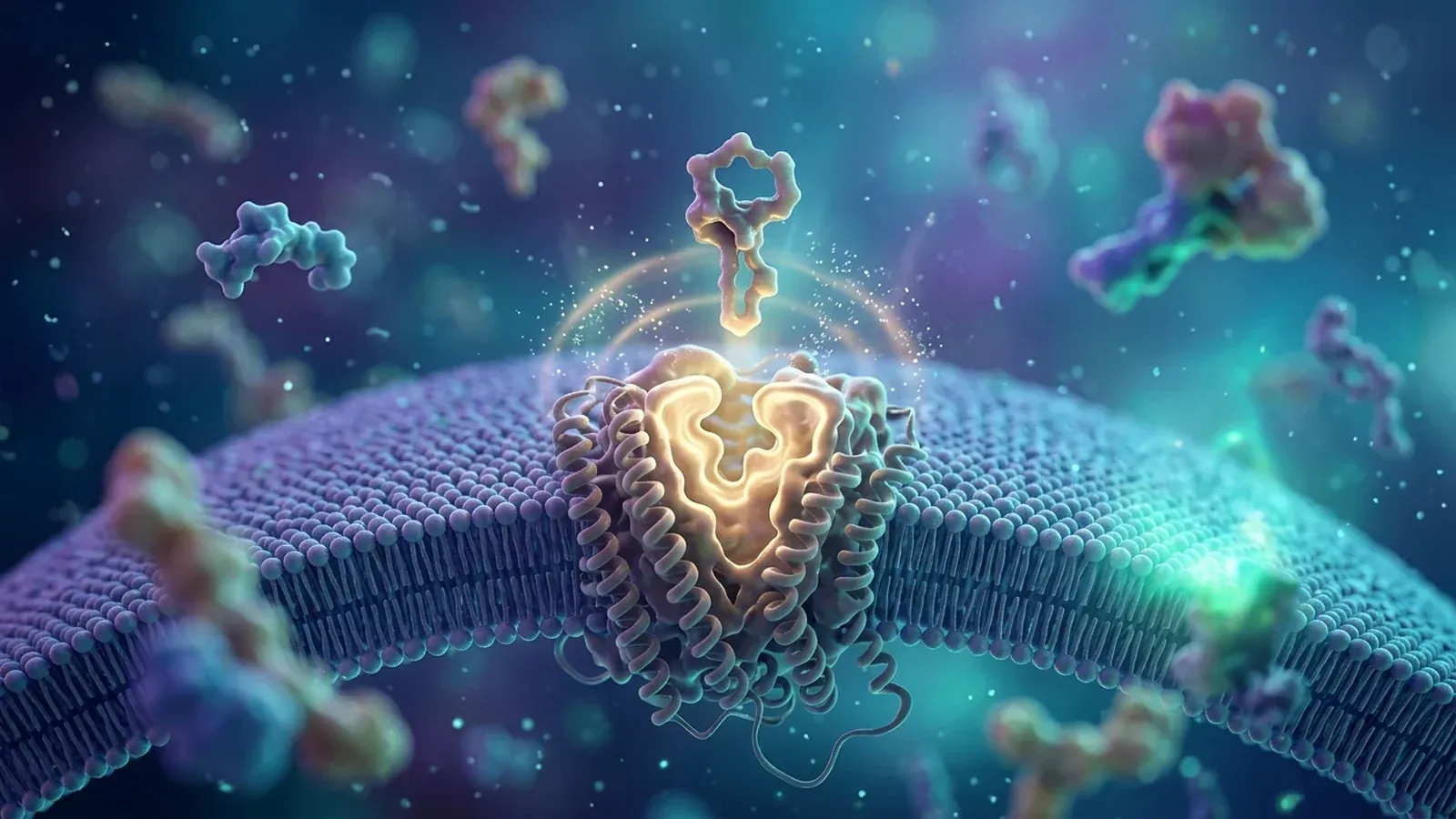
- A peptide is a key cut for one lock. That is why each one does a specific thing and not everything. A peptide that "helps with everything" is the first warning sign.
- Most are injected, and there is a good reason: your digestion exists to take amino acid chains apart. This is not marketing, it is absorption.
- Here is the part almost nobody explains: peptides do not all have the same evidence behind them. There are three very different tiers, and knowing which one you are being offered changes the whole decision.
- Real news: on July 23-24, 2026 an FDA advisory committee recommended adding six peptides to the list compounding pharmacies may use. That is a recommendation about who may prepare them, not a verdict that they work.
- Below you will find every peptide we cover, one by one, with its evidence tier in plain sight and a link to the full guide.
In this guide
- You already have them: your body makes them today
- What a peptide is, in one sentence
- The peptides that are already approved medicine
- Why are most of them injected?
- The three evidence tiers
- What changed in July 2026
- Every peptide in this guide, one by one
- The exception that does work by mouth
- Four questions before using any peptide
- The source matters more than the molecule
- So your expectations are the right ones
- Who is this NOT for?
- GLP-1 programs
- Frequently asked questions
- Sources
You already have them: your body makes them today
While you read this line, your pancreas is releasing insulin. Insulin is a peptide: a chain of 51 amino acids. If you ate a couple of hours ago, your gut released GLP-1, which is also a peptide. And if you trained this week, your muscles released several more.
Your body makes thousands of them. They are not a lab invention or a social media trend. They are the language your cells use to give each other instructions: raise blood sugar, lower appetite, repair this, grow here.
We start here because it changes the question. The question is not "are peptides safe?", any more than you would ask whether hormones are safe. The question is which one, for what, prepared by whom, and with what evidence behind it. That question has an answer, and the rest of this article is it.
What a peptide is, in one sentence
Amino acids are the bricks. String a few together and you have a peptide. String hundreds together and you have a protein. The line sits at roughly 50 amino acids and, like every line drawn by hand, it has borderline cases: insulin, at 51, gets called both depending on the textbook.
For a sense of scale: semaglutide has 31 amino acids. BPC-157 has 15. GHK-Cu has 3. These are small molecules next to a protein, and that has two practical consequences.
First: each peptide is a key cut for one specific lock. It fits a receptor - a docking point on the cell surface - and delivers its instruction there. If the key is not cut for that lock, nothing happens. That is why one peptide does one thing and not everything, and why when someone offers you one that "improves everything," what they are describing is not a peptide. It is a promise.
The second consequence is less pleasant, and we get to it next: being chains of amino acids, they are exactly what your digestion knows how to cut.
The peptides that are already approved medicine
This is the part most people miss, and the most reassuring one. Peptides are not an experimental category waiting to see whether they will ever be useful. They have been in the pharmacy for a century.
Insulin was first used in people in 1922. Before that, type 1 diabetes was a death sentence. It is a peptide, and it is probably the single medicine that has saved the most lives on the list.
Today the list is long. A 2025 review in Signal Transduction and Targeted Therapy surveys the state of peptide-based drug development and describes peptides already in use for managing and diagnosing conditions as different from each other as diabetes, weight loss, oncology and rare diseases, alongside drug delivery platforms and the peptide-based vaccines now in development.
A second review, in Drug Discovery Today, looks specifically at FDA-approved peptide drugs and those in clinical trials, and describes how advances in synthesis and screening have accelerated the field in recent years.
That said, here is the distinction everything else rests on. "Approved peptide" and "peptide sold online" are not the same category, even though both are peptides. A drinking glass and a window are both glass, and you do not use them for the same thing.
Why are most of them injected?
Because your digestion does its job very well.
Think of it this way: a peptide is a chain of amino acids, and your stomach and gut exist, among other things, to take amino acid chains apart and use the bricks. Swallowing a peptide whole mostly means feeding your digestion.
A 2024 review in WIREs Nanomedicine and Nanobiotechnology lays this out using GLP-1 analogs as the example. To reach the bloodstream intact by mouth, they would have to survive the harsh pH of the stomach and its enzymes, then cross both intestinal barriers: the mucus layer and the epithelium. That is why they are given mainly under the skin. The same review notes something elegant: GLP-1 analogs last far longer in the blood than the GLP-1 you make yourself, because they are designed to resist the enzyme that normally takes it apart, DPP-4.
From that comes a genuinely useful rule. When someone sells you a peptide in drops, capsules or a spray while promising the same effect as the injection, the question that decides it is not a marketing question. It is absorption: how much actually reaches the bloodstream? If the person selling it cannot give you that number, nobody has it.
And yes, there is one honest exception with human trials behind it. It is collagen, and it gets its own section below, because it works for a different reason than you would guess.
If you are comparing ways of taking a GLP-1, we cover it in depth in sublingual vs injectable GLP-1.
The three evidence tiers
If you take one idea from this guide, take this one. Every peptide is sold in the same confident tone, but they do not all have the same amount of proof behind them. There are three tiers, and they are far apart.
Tier 1 - Approved medicine
A regulator reviewed the human trials and authorized the drug for a specific indication. There is an established dose, documented side effects and a manufacturer who is accountable. Insulin is here. GLP-1 analogs are here. Thymosin alpha-1 is approved as a medicine in several countries under the name thymalfasin.
Tier 2 - Human trials, but not approved for that use
Studies in people exist, sometimes good ones, but in a specific population that may not be yours. This is the tier where you have to read who actually took part. SS-31 is the perfect example: it has clinical trials, but they are in primary mitochondrial disease and Barth syndrome, not in the aging of healthy people. That does not make it bad. It makes it precise.
Tier 3 - Mostly lab and animals
The results are interesting, the mechanism makes sense, and the human evidence is not there yet. A good share of what is sold online lives here. A peptide being in tier 3 does not mean it is a fraud. It means it has not been measured in people yet.
There is nothing wrong with tier 3 existing. It is how everything that later reaches tier 1 begins. What is wrong is selling tier 3 with tier 1 promises, and charging as if it were.
| Tier | What is behind it | How to read it |
|---|---|---|
| 1 · Approved | Human trials reviewed by a regulator | Solid |
| 2 · Human trials | Studies in people, specific population | Depends |
| 3 · Lab | Cells, animals, plausible mechanism | Early |
What changed in July 2026
There was a concrete development, and it is worth telling properly, because it is being told badly in a lot of places.
On July 23-24, 2026, the FDA's Pharmacy Compounding Advisory Committee (PCAC) met to review seven peptides and decide whether to recommend adding them to the 503A bulks list: the list of substances a compounding pharmacy may use to prepare a medication.
It recommended adding six: BPC-157, KPV, TB-500, MOTS-c, epitalon and Semax. It recommended against emideltide, also known as DSIP.
Now the fine print, which is the part that matters:
- It is a recommendation, not a law. The committee advises. On its own it does not change the legal status of any of those peptides: the FDA still has to act, and that includes a formal rulemaking process.
- It is not a verdict on whether they work. This is the most common and most expensive confusion. The decision is about whether a pharmacy may prepare the substance under quality controls. It does not say the substance does what the seller promises. A peptide can be perfectly legal to compound and still have thin evidence.
- Being left off does not make something dangerous, and being included does not make it proven.
Even so, it is good news, for an unglamorous reason: the gray market in peptides grew partly because the rules were unclear. The clearer it becomes who may prepare what and under what controls, the less room is left for the unlabeled vial bought from a stranger.
Every peptide in this guide, one by one
This is the useful part. Here are the peptides we cover, grouped by what they are used for, with the evidence tier in plain sight and a link to the full guide. If you only read one section, read this one.
Metabolism and weight
- GLP-1 analogs (semaglutide, tirzepatide) - Tier 1. Approved, with large human trials. The clearest case of a peptide that is real medicine. → What GLP-1 is and semaglutide vs tirzepatide
- Tesamorelin - Tier 1 for its approved indication, focused on visceral fat. → Tesamorelin and visceral fat
- MOTS-c - Tier 3 edging toward 2. A peptide of mitochondrial origin, a genuinely interesting mechanism, and human evidence that is still short. → MOTS-c
Defenses and repair
- Thymosin alpha-1 - Tier 1 in several countries, where it is approved as thymalfasin. One of the most studied in the group. → Thymosin alpha-1
- BPC-157 and TB-500 - Tier 3. Plenty of enthusiasm, a plausible mechanism, and human evidence is the missing piece. Both are among the six the FDA committee recommended in July. → BPC-157 and TB-500
- CJC-1295 and ipamorelin - Tier 3 in humans for the use that is promised. → CJC-1295 and ipamorelin
Mitochondria and longevity
- SS-31 - Tier 2, with fine print that matters: its trials are in primary mitochondrial disease and Barth syndrome, not healthy aging. → SS-31 and mitochondria
- Glutathione - Technically a tripeptide: three amino acids, and you make it yourself. → Glutathione and longevity
Mood, desire, skin and hair
- Selank and Semax - Tier 3 for the general public. Semax is another of the six from July 2026. → Selank and Semax
- PT-141 - Tier 1 in its approved form for a specific indication. → PT-141 and sexual desire
- GHK-Cu - Tier 3, with more consistent signals in skin than in hair. → GHK-Cu and hair loss
- Collagen peptides - Tier 2, taken by mouth, and with the explanation of why those do get through. → Collagen peptides
One from the July list is missing and we will say so plainly: we do not yet have a guide for KPV. It is the one item in the catalog we still have to explain, and we would rather tell you before you notice.
The exception that does work by mouth
If peptides do not survive digestion, how do collagen peptides have human trials with measured results? Because they are playing a different game.
A GLP-1 analog has to reach its receptor intact; cut it and it is over. Collagen peptides, by contrast, do not need to arrive intact at any lock. Digestion breaks them into very small fragments - dipeptides such as Gly-Pro and Pro-Hyp - and, as far as has been observed, those fragments are precisely the active part. Being cut up does not ruin the plan. Being cut up was the plan.
The trials exist and are reasonably well built:
- In a randomized, placebo-controlled trial published in Food & Function, 100 women aged 30 to 60 took 1,650 mg a day for 12 weeks. Hydration and desquamation improved at 4 weeks; wrinkles and elasticity at 12. No adverse effects were reported.
- In another trial with 85 women aged 43 to 65, published in the Journal of Cosmetic Dermatology, 5 g a day for 84 days improved dermis density and skin moisture compared with placebo. Both groups used the same face cream, so the comparison started level.
- And in a 2025 trial in the Journal of Microbiology and Biotechnology with 70 adults, 1,650 mg a day for 8 weeks improved wrinkles, elasticity and hydration, and the effects held through the 2-week period after they stopped taking it.
Now the part the label will not tell you, and it falls to us: all three studies were run or funded by companies that make or sell the ingredient. That does not invalidate them - they are randomized, placebo-controlled and published - but it is a fact that changes how much weight you give them. And the effects, while real and measured with instruments, are modest and cosmetic: skin that is better hydrated and somewhat more elastic, not a decade off.
Four questions before using any peptide
This list works on us and on anyone else. In fact, use it on us.
- 1. Are there human trials, and in people like me? It is not enough that studies exist. A trial in primary mitochondrial disease tells you nothing about what will happen to a healthy 45-year-old. If the answer is "there are very promising studies" without saying in whom, you already know which tier you are in.
- 2. Who prepares it? A licensed pharmacy, with a name, an address and accountability - or a vial that arrived in the mail. It is not the same product even if the molecule has the same name.
- 3. What dose, for how long, and who supervises it? If nobody can tell you the dose and the duration, there is no plan. There is a purchase.
- 4. What happens if it does not work? The honest answer to this one tells you more about the seller than the other three combined. Stopping should be easy, and so should cancelling.
The source matters more than the molecule
There is a phrase that shows up on a lot of labels and is worth knowing how to read: "research use only," or "not for human consumption."
It is not a legal formality or a tax trick. It means literally that the product is not intended for use in people, and therefore nobody guarantees three things: that the substance is what the label says, that the amount is what the label says, and that it is sterile.
With a powdered supplement, purity is a question of money wasted. With an injectable, sterility is a question of health - and it is not a problem with the molecule. It is a problem with who prepared it and under what controls. The most studied peptide in the world, badly prepared, is still a badly prepared injection.
That is why, when we talk about peptides, we are talking about preparations dispensed by licensed pharmacies and a licensed physician who reviews your case. Not because it sounds better, but because it is the only part of this equation you can verify before putting something under your skin.
So your expectations are the right ones
This topic starts with something in its favor: the most solid piece of all - insulin, GLP-1 - is already proven and available, and the rest of the field is moving fast. So that what you expect matches what can happen:
- A peptide is a tool, not a plan. It works inside something: food, strength work, sleep, follow-up. On its own, in midair, it is nothing.
- Effects are specific, not general. A key opens a lock. When you read "energy, mood, sleep, skin, fat and recovery" on one bottle, you are reading advertising.
- The timescale is months. The collagen trials above ran 8 and 12 weeks, and the effects appeared in stages. None of this shows up on Tuesday.
- Tier 3 may move up, or may stay there. Some of today's fashionable peptides will have good trials in five years and others never will. We do not know which today, and anyone who tells you they do is selling you a story that has not happened yet.
- The best documented things are still the usual ones. For how you feel and how you age, strength, sleep, protein and metabolic health still win by a wide margin. The full framework is in what longevity really means.
- And none of this is your fault. If you have spent money on a bottle that did nothing, it was not because you were naive. It was because tier 3 is sold in the voice of tier 1, and telling them apart takes exactly the information you just read.
Who is this NOT for?
This section does not change even as the evidence improves.
- If you are pregnant, trying to conceive or breastfeeding. Almost no peptide has safety data in pregnancy, and "no data" does not mean "safe." That decision belongs to your physician.
- If you have an active cancer or a history of cancer. Several of the peptides in this article act on growth and repair signaling. That is not a place to improvise, and not a decision to make by reading.
- If you are under 18. A body that is still growing is not the setting of any of these studies.
- If you plan to use it instead of training, sleeping or eating protein. You would be trading what has large trials behind it for what does not yet, and paying more for the second.
- If the idea is to buy a "research use only" vial and inject it yourself. This is not filler legal language: it is sterility, dose and contents, three things you cannot check in your kitchen.
- If you take medications and do not plan to tell anyone. Interactions are the reason medical review exists. Hiding half the information makes that review useless.
- If what you are looking for is a diagnosis. If something is wrong and you do not know what, the path is finding out, not starting to try molecules.
And the rule that applies to everything you read here: do not start, change or stop anything on your own, not even based on a well-cited article. What decides is your case, seen by your physician.
GLP-1 programs with FDA-approved medications (Wegovy®, Foundayo™, Ozempic®) from $149/month, by telemedicine, in Spanish and English
Of all the peptides in this guide, GLP-1 analogs have the most solid evidence and the largest trials. That is tier 1, and it is what we work with.
It is also why we believe a weight program should come with real clinical oversight. Eating considerably less for months is a medical decision, not just a matter of willpower, and there are things worth watching while it happens: muscle, food, sleep and what you already take.
That part we can support, in English and in Spanish, with continuous follow-up. Cancel whenever you want, in one click.
The path is the same for everything we do: once you start your program, a licensed physician reviews your case - habits, stress, sleep and medical history - and orders labs only if they consider it necessary.
Eligibility is determined by medical evaluation. Individual results vary and are not guaranteed.
See the programsFrequently asked questions
What is a peptide?
A short chain of amino acids. Amino acids are the bricks; string a few together and you have a peptide, string hundreds together and you have a protein. The line sits at roughly 50 amino acids. Insulin has 51 and semaglutide has 31.
Are peptides something new?
No. Insulin has been used as a medicine since 1922 and it is a peptide. Your own body makes thousands of peptides every day: they are the language your cells use to talk to each other.
Why are almost all peptides injected?
Because your digestion is good at its job. A peptide is a chain of amino acids, which is exactly what your stomach and gut are built to take apart. That is why GLP-1 analogs are given under the skin: they would otherwise have to survive stomach acid, enzymes and the intestinal barriers.
So peptide drops and capsules do not work?
It depends on which peptide and for what. The right question is not a marketing question, it is an absorption question: how much actually reaches the bloodstream. There is one honest exception with human trials behind it, collagen peptides, and it works precisely because nothing has to arrive intact at a receptor.
Do all peptides have the same evidence behind them?
No, and this is the part almost nobody explains. There are three very different tiers: medicines approved by a regulator, peptides with human trials but no approval for that use, and peptides that live almost entirely in lab and animal studies. Each individual guide says which tier its peptide sits in.
What did the FDA recommend in July 2026?
The FDA's Pharmacy Compounding Advisory Committee met on July 23-24, 2026 and recommended adding six peptides to the 503A bulks list: BPC-157, KPV, TB-500, MOTS-c, epitalon and Semax. It recommended against emideltide. It is a recommendation: it does not change the law by itself and the FDA still has to act.
If the FDA recommended a peptide, does that mean it works?
No, and the difference matters. That decision is about whether a pharmacy may prepare the substance, not a verdict that it does what is promised. A peptide can be perfectly legal to compound and still have thin evidence.
What does "research use only" mean on a label?
That the product is not intended for use in people. Nobody guarantees that it is pure, that the amount is what the label says, or that it is sterile. With an injectable, sterility is not a detail: it comes down to who prepared it and under what controls.
Do I need labs before I start?
Once you start your program, a licensed physician reviews your case - habits, stress, sleep and medical history - and orders labs only if they consider it necessary. It is not automatic and not required for everyone.
Can a peptide replace training or sleep?
No, and trading one for the other is a bad deal. The best documented things for how you feel and how you age are still strength, sleep, protein and metabolic health. Peptides go alongside, never instead of.
Sources
- Xiao W, Jiang W, Chen Z, Huang Y, Mao J, Zheng W, Hu Y, Shi J. Advance in peptide-based drug development: delivery platforms, therapeutics and vaccines. Signal Transduct Target Ther. 2025;10(1):74. — DOI · via PubMed
- Sharma K, Sharma KK, Sharma A, Jain R. Peptide-based drug discovery: current status and recent advances. Drug Discov Today. 2023;28(2):103464. — DOI · via PubMed
- Pinto SFT, Santos HA, Sarmento BFCC. New insights into nanomedicines for oral delivery of glucagon-like peptide-1 analogs. WIREs Nanomed Nanobiotechnol. 2024;16(2):e1952. — DOI · via PubMed
- Lee M, Kim E, Ahn H, Son S, Lee H. Oral intake of collagen peptide NS improves hydration, elasticity, desquamation, and wrinkling in human skin: a randomized, double-blinded, placebo-controlled study. Food Funct. 2023;14(7):3196-3207. — DOI · via PubMed
- Vleminckx S, Virgilio N, Asserin J, Prawitt J, Silva CIF. Influence of collagen peptide supplementation on visible signs of skin and nail health and aging in an East Asian population: a double blind, randomized, placebo-controlled trial. J Cosmet Dermatol. 2024;23(11):3645-3653. — DOI · via PubMed
- Lee E, Ahn DK, Kim JH, Lee S, Kim HJ, Lee HK, Shin JH. Skin anti-aging and moisturizing effects of low-molecular-weight collagen peptide supplementation in healthy adults: a randomized, double-blind, placebo-controlled clinical trial. J Microbiol Biotechnol. 2025;35:e2507008. — DOI · via PubMed
- Meeting of the FDA Pharmacy Compounding Advisory Committee (PCAC), July 23-24, 2026, on substances nominated for the 503A bulk drug substances list. The committee's recommendations are advisory and require further FDA action.
The three collagen peptide trials cited were run or funded by companies that manufacture or sell the ingredient evaluated. We flag it because it changes how much weight to give them, not because it invalidates the results.
Related articles
Your trust is worth more than a sale.
This article is informational and is not medical advice. SCTS1 does not prescribe medication. All medical care, prescriptions and treatment plans are provided by licensed physicians through our partner platform, and preparations are dispensed by licensed pharmacies. Eligibility is determined by a licensed provider through medical evaluation. The evidence tiers described here are a way of organizing information and are not an official classification by any regulatory agency. The July 2026 FDA advisory committee recommendations are advisory, do not by themselves change the legal status of any substance, and are not a determination of efficacy. The collagen peptide trials cited were run or funded by manufacturers of the ingredient and their effects are modest and cosmetic. Studies in specific diseases do not transfer automatically to healthy people. Do not start, change or stop any medication or supplement on your own. Individual results vary and are not guaranteed.