Semaglutide vs. tirzepatide: the real difference
Semaglutida vs. tirzepatida: la diferencia real
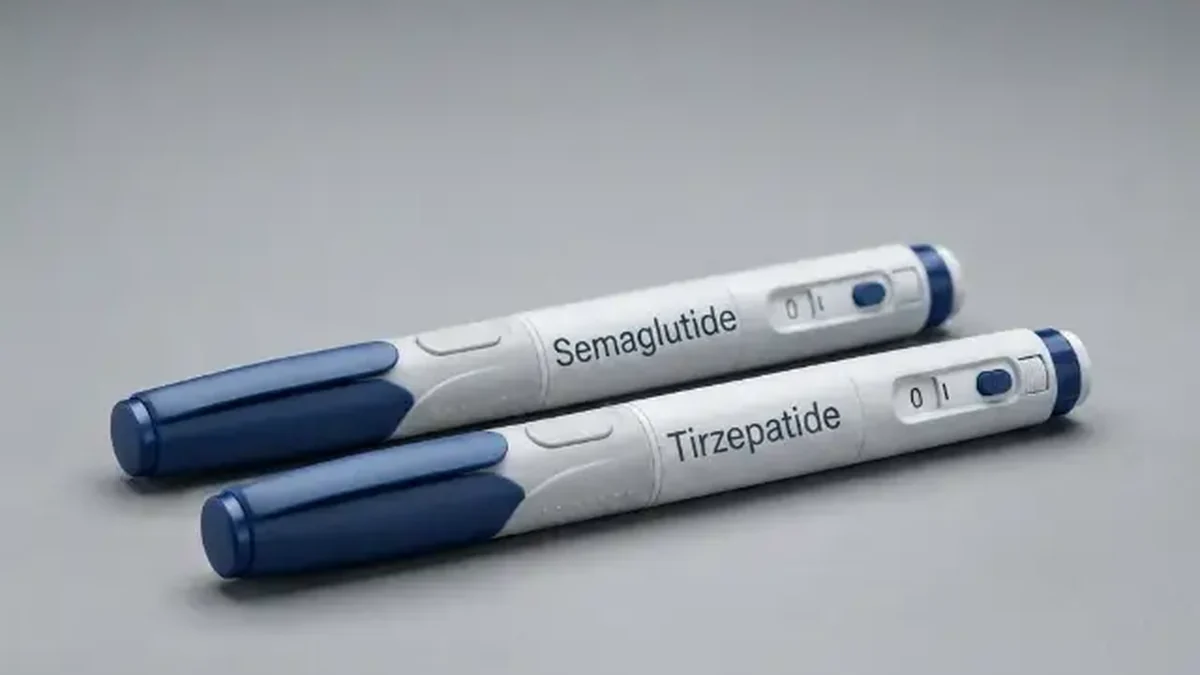
Illustrative image. Does not represent guaranteed results.
Let's start with the good part, which also happens to be the most important part: both of them work. Not marginally. Both produce, in large and well-run trials, the kind of weight loss that fifteen years ago you only saw after surgery. That's the headline underneath everything else, and it doesn't change based on which one you pick.
There's a second piece of good news, and it's recent. For years, whenever someone asked "which one is better?", the honest answer was "nobody knows, because they were never compared directly." That has changed. In 2025 the first trial that put the two medications head to head — same people, same time, same rules — was published.
So today we can answer you with data instead of guesswork. We'll explain what each one does inside your body, what that direct comparison actually showed, where each one wins away from the scale, and — the part almost nobody tells you — why the drug that takes off the most weight in a trial isn't always the right one for you.
The essentials in 30 seconds
- Semaglutide mimics one hormone, GLP-1. Tirzepatide mimics two: GLP-1 and GIP. One key versus two.
- In the first trial to compare them head to head (72 weeks, 751 adults), tirzepatide reduced body weight by 20.2% and semaglutide by 13.7%.
- Waist circumference told the same story: −18.4 cm with tirzepatide versus −13.0 cm with semaglutide.
- But weight isn't the only marker. Semaglutide is the only one of the two with a 17,604-person trial showing fewer heart attacks and strokes — and an FDA approval for exactly that.
- And tirzepatide is the only one FDA-approved for moderate-to-severe obstructive sleep apnea in adults with obesity.
- Side effects look similar for both: mostly digestive, mild to moderate, concentrated during dose escalation.
- The one that helps you is the one you can sustain. A licensed physician decides that with your history in hand — not a table on the internet.
What you'll read
- One key and two keys
- The trial that finally compared them directly
- The numbers for each one separately
- Where semaglutide wins: the heart
- Where tirzepatide wins: sleep
- Side effects, plainly
- What actually decides which one fits you
- The factor almost nobody looks at
- So your expectations are the right ones
- Who is this NOT for?
- Frequently asked questions
- How we work
- Sources
One key and two keys
Your gut makes hormones every time you eat. They aren't an extra feature — they're how your body tells your brain and your pancreas that food has arrived. Two of those hormones are called GLP-1 and GIP.
GLP-1 does three useful things. It tells the pancreas to release insulin, but only when it's needed. It slows down how fast your stomach empties, so you stay full longer. And it reaches the parts of the brain that regulate hunger and turns down the volume on the voice telling you to eat again.
GIP is the other meal hormone. It works on insulin and also on how fat tissue handles the energy arriving at it. For years it got less attention. We now know that adding it changes the outcome.
With that in hand, the technical difference fits on one line:
- Semaglutide → acts on one receptor: GLP-1.
- Tirzepatide → acts on two: GLP-1 and GIP.
Think of a lock. Semaglutide has one key and it opens the lock well. Tirzepatide has two keys and opens two locks at once. It's reasonable to expect two to do more than one — and, as you'll see, on average that's what happened. But "on average" and "in your case" are not the same sentence, and that gap is where the physician comes in.
The trial that finally compared them directly
For years the comparison was done badly: someone would take a number from a semaglutide trial, set it next to a number from a tirzepatide trial, and draw a conclusion. The problem is that those were different people, in different countries, over different lengths of time. Comparing that way is like comparing two runners who never ran the same race.
In 2025 the New England Journal of Medicine published the trial that fixed this. It's called SURMOUNT-5. Researchers took 751 adults with obesity and without type 2 diabetes, randomly split them into two groups, and for 72 weeks gave one group the maximum tolerated dose of tirzepatide and the other the maximum tolerated dose of semaglutide. Same people, same window, same rules.
Waist circumference told the same story, and for many people that's the number you actually feel in your clothes: −18.4 cm with tirzepatide versus −13.0 cm with semaglutide.
And it wasn't only the average. More participants in the tirzepatide group hit the bigger milestones — losing at least 10%, 15%, 20% and even 25% of body weight — than those in the semaglutide group.
What this trial does settle
It settles the question about averages. Placed side by side, in comparable people over the same period, tirzepatide produced more weight loss. That's no longer an assumption or an indirect calculation — it's a measured result.
What it doesn't settle
Two things, and we mention them because they're useful to you.
First: the trial was open-label. Participants knew which medication they were getting. In a weight trial, knowing what you were assigned can influence what you do with food and exercise. The researchers report this clearly; it isn't a hidden flaw, but it's an honest caveat.
Second, and more important for you: an average is not a forecast. Inside that 13.7% for semaglutide there are people who lost far more than tirzepatide's 20.2% average. And inside the tirzepatide group, some people lost little. Medicine doesn't hand out averages; it handles individual cases.
The numbers for each one separately
The original trials still matter, because they were much larger and measured against placebo — which is how you prove something works at all.
STEP 1 (semaglutide 2.4 mg): 1,961 adults with overweight or obesity and no diabetes, 68 weeks. Weight: −14.9% with semaglutide versus −2.4% with placebo. 86.4% of those on semaglutide lost at least 5% of body weight, and 69.1% lost at least 10%.
SURMOUNT-1 (tirzepatide): 2,539 adults with obesity and no diabetes, 72 weeks, three doses. Weight: −15.0% at 5 mg, −19.5% at 10 mg and −20.9% at 15 mg, versus −3.1% with placebo.
| Trial | Duration | Weight change |
|---|---|---|
| STEP 1 — semaglutide 2.4 mg | 68 weeks | −14.9% |
| SURMOUNT-1 — tirzepatide 15 mg | 72 weeks | −20.9% |
| SURMOUNT-5 — semaglutide (direct) | 72 weeks | −13.7% |
| SURMOUNT-5 — tirzepatide (direct) | 72 weeks | −20.2% |
Notice something that says a lot: the numbers from the direct trial land close to the numbers from the original trials. That's a sign the results are solid and repeatable — exactly what you want to see in science.
Where semaglutide wins: the heart
This is the part that gets lost in almost every comparison, and it's why "which one takes off more weight" is an incomplete question.
In 2023, SELECT was published: a trial of 17,604 people aged 45 or older who had cardiovascular disease and overweight or obesity, but not diabetes. Half received semaglutide 2.4 mg; half received placebo. They were followed for nearly four years on average. The question wasn't how much weight came off — it was whether fewer of them died, had heart attacks, or had strokes.
On the strength of that trial, on March 8, 2024 the FDA approved semaglutide at obesity doses to also reduce the risk of cardiovascular death, heart attack and stroke in adults with heart disease and overweight or obesity. It was the first time the FDA approved a medication to reduce cardiovascular risk specifically in people carrying excess weight.
Tirzepatide does not, as of today, have an equivalent result in this area. That does not mean it's bad for the heart — it means the trial proving it doesn't exist yet at that level of evidence. In medicine, "not proven" and "proven not to" are very different things, and it's worth not confusing them.
For someone who has already had a heart attack, or who lives with known cardiovascular disease, this can weigh more than six percentage points of weight. That's why a physician asks about your history before asking about your goal.
Where tirzepatide wins: sleep
Tirzepatide has its own territory where it's the only one with approved evidence.
In 2024 two trials known as SURMOUNT-OSA were published, in adults with moderate-to-severe obstructive sleep apnea and obesity. One enrolled people not using a positive airway pressure (PAP) machine, the other enrolled people who were. They measured the apnea-hypopnea index: how many times per hour your breathing stops or drops while you sleep. At baseline the average was around 50 interruptions per hour — roughly one every minute or so, all night long.
Tirzepatide significantly reduced that index compared with placebo, and also improved hypoxic burden, patient-reported sleep, C-reactive protein (an inflammation marker) and systolic blood pressure.
On December 20, 2024 the FDA approved tirzepatide for moderate-to-severe obstructive sleep apnea in adults with obesity, alongside a reduced-calorie diet and increased physical activity. It was the first medication approved for that condition. Semaglutide does not hold that indication.
If you snore heavily, wake up tired after eight hours, or someone has told you that you stop breathing in your sleep, say so in the first conversation with the physician. It changes the calculation.
Side effects, plainly
For both, the profile is similar and it's mostly digestive: nausea, diarrhea or constipation, some reflux, sometimes vomiting. In the trials these were mostly mild or moderate and concentrated in the weeks when the dose is being increased, not across the whole course of treatment.
In the head-to-head trial, the most common adverse events were gastrointestinal in both groups. Neither came out with a clearly better safety profile than the other on that front.
What does matter to know:
- Almost all of the digestive side is manageable: escalating the dose more slowly, smaller portions, less fat and alcohol on those days, more water.
- Most early discontinuations happen because nobody walked the patient through those first weeks — not because the medication was intolerable.
- There are uncommon but serious effects — pancreatitis, gallbladder problems — that a physician should explain and monitor. This is why it isn't an internet product.
- Both carry a warning about thyroid tumors observed in rodents. Whether it applies to humans isn't known, but it defines who should not be prescribed either one. See below.
If you want the practical detail on getting through those first weeks, we wrote it up separately in managing GLP-1 side effects and your first month on a GLP-1.
What actually decides which one fits you
This is the list a physician actually reviews. None of these points show up in the comparison tables circulating on social media.
- Your cardiovascular history. If there's already been an event, the SELECT evidence carries weight.
- Whether you have diagnosed or suspected sleep apnea. There, tirzepatide holds its own indication.
- Whether you have type 2 diabetes. It changes doses, targets and monitoring.
- How you've tolerated things before. If your stomach is sensitive, a slower escalation is planned from day one.
- What other medications you take. Slower stomach emptying changes how other pills are absorbed.
- Your thyroid and your family history. Some backgrounds rule this class out entirely.
- What you can sustain over time — availability, coverage, cost, injection routine.
Not one of those seven is answerable from the outside. That's why the honest answer to "which one is better?" starts with "it depends" — and anyone who answers without asking you anything is selling, not advising.
The factor almost nobody looks at
Here's the uncomfortable part, said with care: the medication that takes off the most weight in a trial does nothing for you if you stop it after three months.
The evidence in this class is consistent: when treatment stops, a meaningful share of the weight comes back, because the hunger and energy-expenditure mechanisms return to where they were. That is not a personal failure. It's biology, and it works the same way with both medications.
Which changes the question. It isn't "which one takes off more?" It's "which one can I sustain, given my life, my budget and my stomach?" A 13.7% that lasts three years is worth far more than a 20.2% that lasts four months.
And what decides that second question is almost never the molecule. It's the support around it: someone adjusting your dose when your stomach complains, reminding you about protein, explaining what to do when weight loss stalls, pushing you to protect your muscle while you lose. None of that comes in the box.
So your expectations are the right ones
Three clarifications, so nothing catches you off guard:
- The trial percentages are group averages at 68 or 72 weeks, with clinical follow-up and with diet and activity changes included. They are not an individual promise or a timeline.
- The head-to-head trial was open-label and ran in adults with obesity without type 2 diabetes. If you have diabetes, that result doesn't transfer to you as-is.
- All of these trials used brand-name products at defined doses. Compounded medications contain the same class of active ingredient but are not FDA-approved finished pharmaceutical products, and trials of this scale do not exist for them.
None of that is a brake. It's the right frame for reading the numbers — and for measuring your own progress against reality rather than against a headline once you start.
Who is this NOT for?
This class of medication isn't for everyone, and the list isn't negotiable:
- People with a personal or family history of medullary thyroid carcinoma, or with multiple endocrine neoplasia type 2 (MEN2).
- People with a history of pancreatitis, absent explicit medical indication and monitoring.
- People who are pregnant, trying to conceive, or breastfeeding.
- People with active eating disorders or a history of them, without specialized treatment running in parallel.
- People with advanced kidney or liver disease, or gastroparesis, without specific evaluation.
- Anyone under 18 outside of approved indications and specialized supervision.
- Anyone looking for a six-week shortcut before an event. This isn't that, and telling you now saves you money.
If you recognize yourself on that list, it doesn't mean there's nothing for you. It means the conversation starts somewhere else.
Frequently asked questions
So is tirzepatide better?
For weight loss, on average and in the only trial that compared them directly, yes: 20.2% versus 13.7% at 72 weeks. For reducing heart attack and stroke risk in people with cardiovascular disease, the one with the evidence and the FDA approval is semaglutide. "Better" depends on better for what — and on who you are.
Which one has fewer side effects?
They're similar. Across the three main trials the profile was mostly digestive, mild to moderate, and concentrated during dose escalation. Neither came out clearly ahead on that.
Can I switch from one to the other?
It's a clinical decision, and it's done often. It depends on your tolerance, your response and your history. It isn't something to adjust on your own or by buying something else.
Is losing weight faster better?
Not necessarily. Losing too fast usually costs more muscle, and muscle is exactly what you want to keep. A physician sets the pace, and eating enough protein and training with resistance matter as much as the dose.
Does the compounded version give the same results?
The trials cited here were run with brand-name products. Compounded medications contain the same class of active ingredient but are not FDA-approved finished pharmaceutical products, and trials of this scale do not exist for them.
What if my insurance only covers one?
That's an entirely legitimate consideration and it belongs in the first conversation, not the last. The one you can sustain usually beats the one that looks better in a table.
Do you offer care in Spanish?
Yes. All of our content and our care are available in Spanish and English.
How we work
This article doesn't push you toward either one. If anything, it takes the hurry out of the decision — and we're at peace with that: we'd rather you arrive informed than arrive fast.
We do have programs, and how we offer them matters more to us than the product itself.
Once you start your program, a licensed physician reviews your case — habits, stress, sleep and medical history — and orders labs only if they consider it necessary. Depending on your medical history and your status, the clinician may schedule a video visit with you if they consider it necessary.
From there:
- A medical prescription when appropriate. These are not internet supplements.
- A licensed pharmacy, with its chain of custody and its controls.
- Direct shipping to your home, in two days.
- A care team available for your questions.
- Recurring deliveries and dose adjustment with an optional monthly check-in.
- Cancel whenever you want, in one click.
We offer clinician-supervised weight management and hormone health programs, and GLP-1 programs with FDA-approved medications (Wegovy®, Foundayo™, Ozempic®) from $149 a month, by telemedicine, in Spanish and English. And if reviewing your case shows that a different route — or none at all — makes more sense for you, we'll tell you, even when it doesn't suit us.
Eligibility is determined by medical evaluation. Individual results vary and are not guaranteed.
Sources
Scientific articles located through PubMed. Approvals verified against FDA regulatory sources. Accessed September 27, 2026.
- Aronne LJ, Horn DB, le Roux CW, et al. Tirzepatide as Compared with Semaglutide for the Treatment of Obesity. N Engl J Med. 2025;393(1):26-36. doi:10.1056/NEJMoa2416394
- Wilding JPH, Batterham RL, Calanna S, et al. Once-Weekly Semaglutide in Adults with Overweight or Obesity. N Engl J Med. 2021;384(11):989-1002. doi:10.1056/NEJMoa2032183
- Jastreboff AM, Aronne LJ, Ahmad NN, et al. Tirzepatide Once Weekly for the Treatment of Obesity. N Engl J Med. 2022;387(3):205-216. doi:10.1056/NEJMoa2206038
- Lincoff AM, Brown-Frandsen K, Colhoun HM, et al. Semaglutide and Cardiovascular Outcomes in Obesity without Diabetes. N Engl J Med. 2023;389(24):2221-2232. doi:10.1056/NEJMoa2307563
- Malhotra A, Grunstein RR, Fietze I, et al. Tirzepatide for the Treatment of Obstructive Sleep Apnea and Obesity. N Engl J Med. 2024;391(13):1193-1205. doi:10.1056/NEJMoa2404881
Related articles
- What a GLP-1 is and how it works
- Your first month on a GLP-1
- Managing GLP-1 side effects
- Sublingual or injectable GLP-1: what changes
- When weight loss stalls
- Strength training while losing weight
Your trust is worth more than a sale.
This article is informational and is not medical advice. SCTS1 does not prescribe medications. All medical care, prescriptions and treatment plans are provided by licensed physicians through our partner platform. Treatment eligibility is determined by a licensed provider. Compounded medications contain the same class of active ingredient but are not FDA-approved finished pharmaceutical products. Individual results vary and are not guaranteed.